
Medication and medical devices at ATL security: what TSA says to do
TSA allows medically necessary liquids over 3.4 oz if you declare them. How pills, pumps, implants and CPAPs are screened, and TSA Cares' 72-hour ask.
Tell the officer before screening starts that you’re carrying medication or wearing a medical device. TSA’s Disabilities and Medical Conditions page says medically necessary liquids, gels and aerosols can go over the usual 3.4 ounces in reasonable quantities, as long as you declare them at the checkpoint.
Pills and liquids go in a bin, and you say so first
TSA says pills and other solid medication go through screening by visual inspection or X-ray, and officers may test them for traces of explosives. Clear labels help the screening. TSA’s Medical page calls labels recommended and not required.
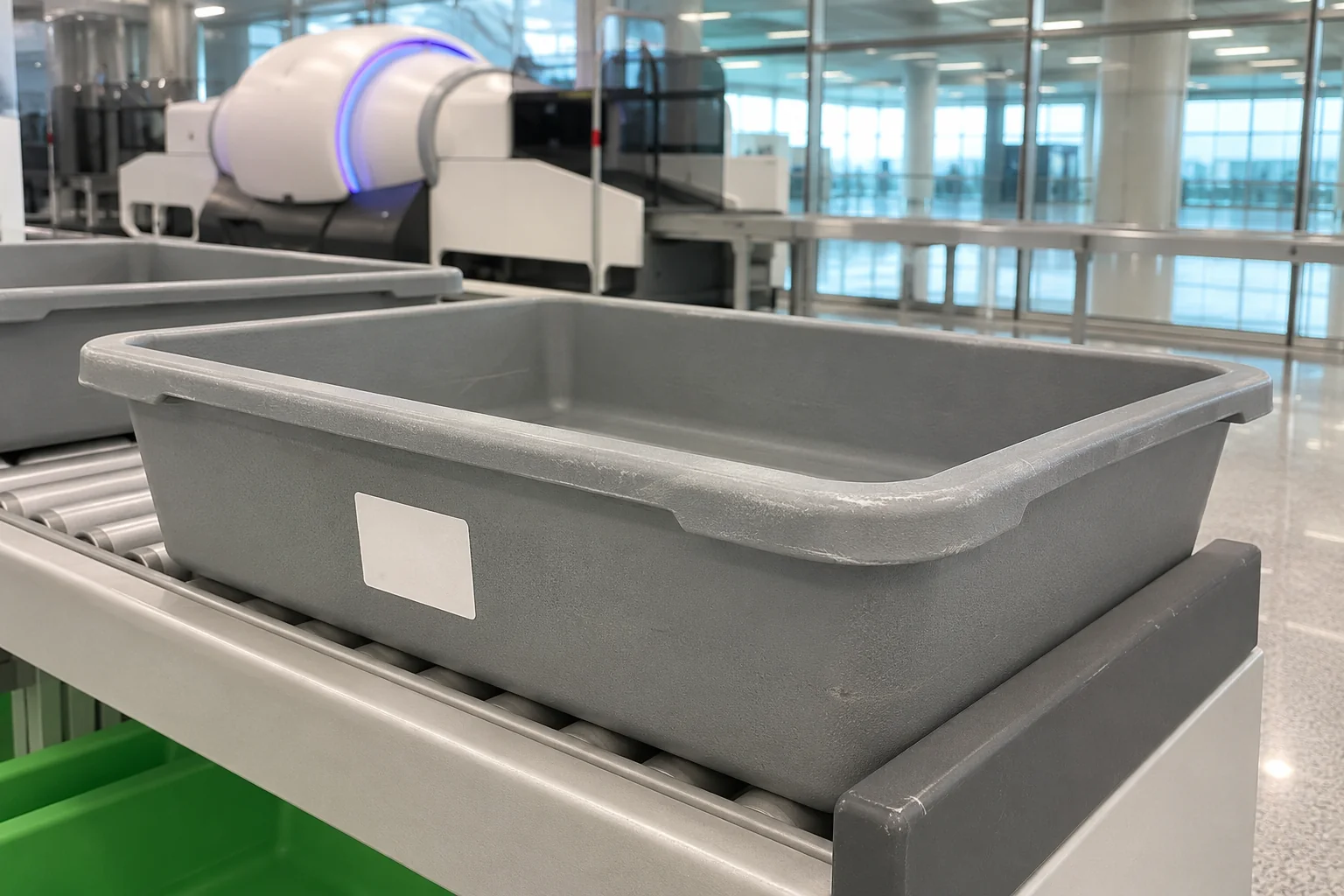
Take medically necessary liquids out of your carry-on and put them in a bin or bowl, apart from your other property. Freezer packs, IV bags, pumps and syringes that go with them go in the same bin. Ice packs and gel packs can be frozen, partly frozen or melted. If screening technology can’t clear a liquid, an officer may ask you to open it for vapor analysis. TSA says screening never puts anything into the liquid itself.
If you don’t want a liquid X-rayed or opened, tell the officer. TSA then takes additional steps to clear it, and you go through extra screening that may include the body scanner, a pat-down and a check of your carry-on. A liquid that alarms needs more screening, and if the alarm can’t be resolved, TSA says the item may not be allowed.
TSA’s Medical page adds these notes:
- EpiPens and inhalers fall under the same declare rule as other medically necessary liquids.
- Some contact lens solutions contain chemicals that typically alarm, so TSA recommends packing solution over 3.4 ounces in checked baggage.
- If you have diabetes, tell the officer you’re carrying supplies. Insulin pumps and supplies must be accompanied by insulin, and insulin in any form or dispenser must be clearly identified.
Devices on your body are screened by lane
Tell the officer where a device sits before screening begins. The Disabilities and Medical Conditions page says you aren’t required to remove a medical device attached to your body. TSA’s Medical page says to submit an external device for X-ray if you can safely disconnect it, and to ask the manufacturer whether it can pass through the X-ray, metal detector or body scanner.
| Device | Standard lane | TSA PreCheck lane |
|---|---|---|
| Insulin pump or glucose monitor | Additional screening: a self pat-down of the device and a test of your hands for trace of explosives | Additional screening only if it alarms the metal detector or body scanner |
| Bandage, compression sleeve or dressing | Additional screening: inspection, hand-held metal detector, a hands test and a test of the item for trace of explosives | Additional screening only if it alarms, with a self pat-down and hand-held metal detector on the item |
| Prosthesis, cast, support brace or sling | The same additional screening, and a brace that alarms must come off for X-ray | Additional screening only if it alarms |
For a prosthesis, TSA says you can ask for private screening at any time and have a witness of your choice present. It also says officers won’t ask you to expose the breast, groin or buttocks.
Implants, CPAPs and oxygen concentrators have their own steps
- Pacemaker or other internal device: TSA says to tell the officer about metal implants, a bone growth stimulator, a pacemaker or a defibrillator. It says you shouldn’t be screened by the walk-through metal detector with an internal device and to consult your physician before flying. If you decline the body scanner or alarm the metal detector, you get a pat-down.
- Ostomy pouch, medical port or catheter: You can be screened without removing or exposing it, in either lane. If more screening is needed, you do a self pat-down of the device, then a hands test.
- CPAP, BiPAP, APAP or nebulizer: In a standard lane the machine, mask and tubing may stay in the carrying case for X-ray but may have to come out of your carry-on. In a PreCheck lane they stay in the case and in the carry-on. Liquids for a nebulizer are exempt from the 3-1-1 rule.
- Portable oxygen concentrator: TSA says not all airlines allow one, so check with your airline and the manufacturer first. Tell the officer whether you can disconnect, which TSA says to settle with your doctor. If you can, the unit goes through X-ray. If you can’t, officers test the equipment for traces of explosives.
- Hearing aids and cochlear implants: You don’t have to remove them, though an alarm can bring a pat-down or inspection of the device.
Ask for a specialist, ideally 72 hours ahead
TSA’s Passenger Support page says you can request a Passenger Support Specialist, a TSA officer trained to assist people with disabilities or medical conditions. Ask at least 72 hours before departure, as ATL’s security page also says, through the TSA Cares form or at (855) 787-2227. TSA lists that line as open weekdays 8 a.m. to 11 p.m. ET and weekends and holidays 9 a.m. to 8 p.m. ET.
The page names liquids over 3.4 ounces and devices that may affect screening technology among the reasons to ask. The specialist doesn’t exempt you from screening or speed it up.
If you didn’t arrange it, TSA’s Medical page says that when you need help with screening, you may ask for a Passenger Support Specialist or a Supervisory TSA Officer. Airport wheelchair service comes from your airline, and the wheelchair assistance guide explains how to book it.
What ATL adds
ATL’s security page says every checkpoint is ADA accessible and that you can reach every concourse and gate from any checkpoint. If your device screens more lightly in a PreCheck lane, each checkpoint’s lanes and hours are on the security page.
To replace a medication or buy supplies past security, start with ATL’s 24-hour listings under medicine, which include the CVS Kiosk next to Gate T6 on Concourse T, which is a vending kiosk, and Travel@Ease at the center of Concourse A. They also take in Pharmabox CBD vending machines at the center of Concourse A and east of center on Concourse E. The airport’s terminal map tags the CVS Kiosk with First Aid, Medicine and Personal Care, among other goods, and describes Pharmabox as “for all your health and wellness needs while on the go.” It names no particular medicine for any of them, so check what a counter or machine carries before you count on it.
The airport’s map marks defibrillators, and the medical page gives the count on each concourse and in the terminals. The medical help guide covers who to ask and where to buy supplies.
Sources
- Our security page, medical page, medical help guide and wheelchair assistance guide
- TSA’s Disabilities and Medical Conditions page, Medical page, Passenger Support page and Liquids, Aerosols, and Gels Rule page
- ATL’s passenger security page, amenities page and terminal map